AfriNov's Engagement with Young People in Kenya
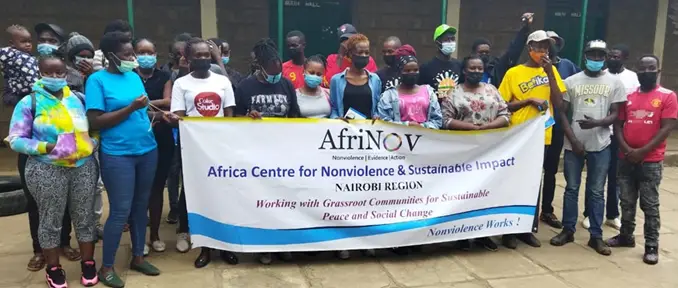
Women sharing their touching stories during one of the AfriNov supported forums
Insecure land rights for women are a very big threat to women empowerment and the fight on gender equality. Cases of women being disinherited after losing a spouse are common in Kenya. This has contributed to women and children being left destitute and vulnerable, compromising the lives of once happily settled families.
After the promulgation of the 2010 Kenyan constitution which is very progressive and recognizes women rights it was expected that the implementation would follow. However, that has not been the case. Women are being held back.
Introduction
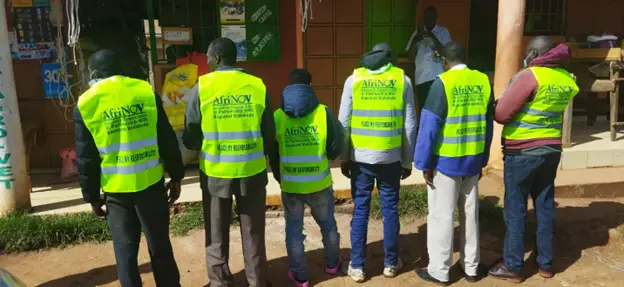
Young people constitute 75% of Kenya's 47.6 million population, yet their political participation remains deeply underwhelming. Of 22.1 million registered voters, youth account for only 39.84%, according to the IEBC — a disconnect that AfriNov set out to address deliberately and creatively.Recognising that youth are not merely beneficiaries but agents of democratic change, AfriNov partnered with youth groups in formal and informal settlements across Nairobi and Western Kenya — including YOCHAN, Wahenga, and others — to deliver democracy, governance, and peacebuilding programming. The approach was intentional: meeting young people in their own language, through their own creative forms.by backward customary laws and practices, which continue to prohibit women from owning or inheriting land and other forms of property. Women only enjoy secondary rights to land by association to male relatives. This is despite the law being protective to widows. The patriarchal cultural practices subject women and children to poverty or at the mercy of relatives from the father’s side.
To support women in their quest for justice, AfriNOV has supported their efforts by offering training on understanding the provisions of the law. They have supported mediation, arbitration and negotiations with families in order to protect women’s land and property rights. They have supported through journeying together in seeking for the legal channels to pursue their rights through challenging the obstacles in the system denying them the opportunity to enjoy the provisions in the Kenya Constitution 2010.
Civic Empowerment Through Creative Engagement
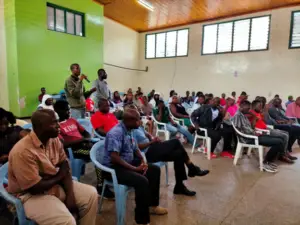
AfriNov's programming equipped young people with knowledge of their rights, the mechanics of electoral participation, and the tools of nonviolent civic action. Rather than conventional formats, the programme embraced graffiti, music, dance, spoken word, sports, and community vetting forums — mediums that young people trust and own.The results were tangible. Youth reported newfound confidence to hold conversations on issues affecting them — unemployment, crime, the cost of living. Wahenga group members successfully lobbied for inclusion in the Kazi Kwa Vijana initiative. One member stood as a parliamentary aspirant in the 2022 elections. As one youth leader put it:"The organisation has opened our eyes. We are now focusing on effective peer-to-peer youth organising to form a formidable force. We have four years to plan."When the price of maize flour surged ahead of the 2022 elections, youth groups launched the #NjaaRevolution campaign — using protest art, graffiti, and social media to demand accountability on the cost of living, demonstrating a generation increasingly fluent in civic agency.
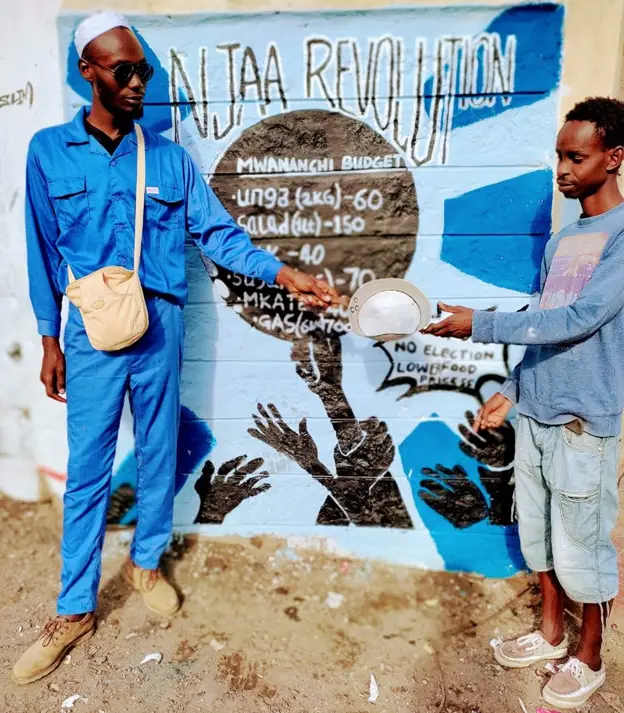
Protest art used to communicate possible election boycott due to the rising cost of living
Youth-Led Peacebuilding
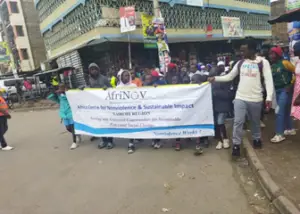
AfriNov recognised that the same youth too often cast as perpetrators of electoral violence could, if properly engaged, become its most effective deterrents. Programming focused on early warning, dialogue, and creative peace advocacy in the lead-up to the August 2022 elections.Youth groups conducted peace walks, organised sports tournaments that brought together diverse communities including local refugee populations, held art and music concerts, and ran social media campaigns countering inflammatory rhetoric. Trans Nzoia youth living with disabilities organised a peace walk drawing attention to their particular vulnerability in the event of election violence. The Far East Basketball Association (FEBA) used sport to build cross-community social cohesion in Kayole, while Wahenga's art concert on International Youth Day reframed young people as peacemakers rather than spoilers.Online, youth were quick to counter calls for post-election protest, insisting that any grievances be channelled through legal and constitutional processes. The slogan #ViolenceSiSwag — violence is not cool — became a rallying call.The outcome: the 2022 elections passed with markedly reduced youth-related violence in AfriNov's areas of engagement.