
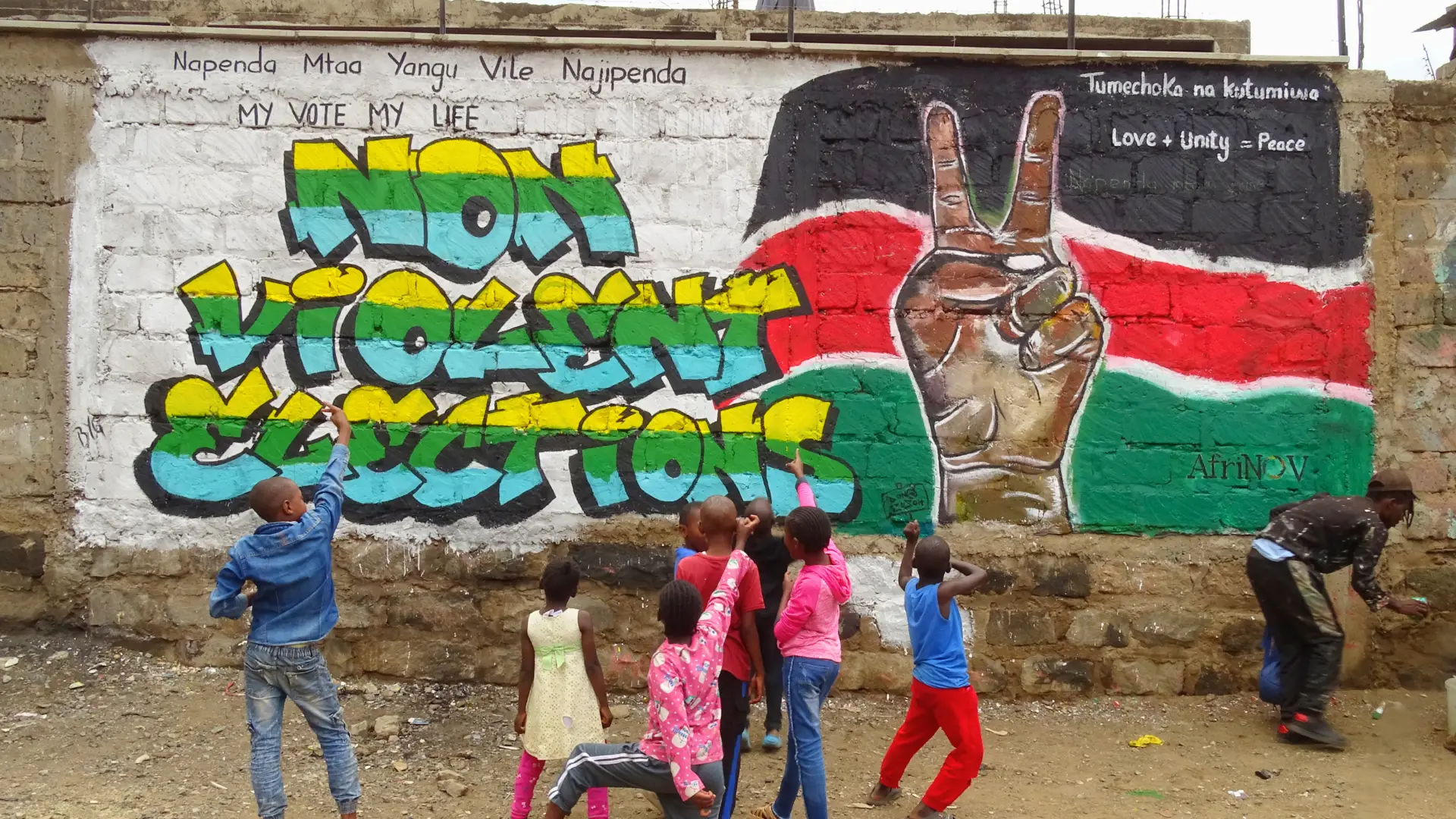
Peace is not the absence of conflict. It is the presence of justice, dignity and the institutional conditions that allow communities to resolve their differences without resorting to violence. In a world where conflict events have nearly doubled since 2020 and Sub-Saharan Africa remains one of the least peaceful regions globally AfriNov stands on a simple but powerful conviction: nonviolence works.
Changes achieved through nonviolent action are roughly three times more likely to hold than those achieved through violence because they are rooted in inclusion, dialogue and community ownership.
AfriNov's Peacebuilding and Nonviolence program is our founding pillar and the lens through which all of our work is shaped. Since our establishment in the aftermath of Kenya's 2007/08 post-election violence we have walked alongside communities bearing the weight of conflict, inequality and injustice.
We have learned that sustainable peace cannot be imposed from the outside. It must be built from within, by people who understand their context, own their solutions and choose dialogue over division.
Our approach is community-centred, evidence-based and culturally responsive. At its heart is our proven Community Resource Person (CRP) model, a network of trained local peacebuilders who serve as trusted voices within their own communities, amplifying local knowledge and sustaining change long after any project cycle ends.
We apply the "do no harm" principle across all our interventions ensuring that our work never reignites existing tensions or provokes new disputes.
We work across three focus areas:

Electoral Conflict Prevention
Kenya was ranked first in Africa and fifteenth globally for frequency of protests in 2024. Electoral conflict is cyclical and deeply rooted in ethnic politics, inequality and unresponsive leadership. AfriNov responds through comprehensive civic education campaigns, trust-building between electoral stakeholders, and community-based dispute resolution frameworks that address grievances before they escalate. We train and deploy community election observers and engage citizens on their rights and responsibilities in democratic processes.

Inter-Ethnic Harmony and Social Cohesion
Kenya's diversity is a source of richness and a site of historical tension. AfriNov facilitates dialogue platforms, inter-cultural exchange programmes and shared economic initiatives that build forward-looking partnerships across ethnic lines. Through our Turning the Tide (TTT) methodology we support communities to confront discriminatory practices, heal historical wounds and construct new social contracts built on mutual respect and shared purpose.

Cross-Border and Regional Conflict
Pastoralist communities across Kenya's arid and semi-arid regions face persistent threats from cattle rustling, resource competition and cross-border violence. In 2023 alone 202 lives were lost and over 60,000 livestock stolen. AfriNov's cross-border programming facilitates community-to-community peace agreements, resource-sharing dialogues and collaborative engagement among leaders across county and national borders. We also extend our reach to regional partners in East and Central Africa — Uganda, Rwanda, Burundi and the DRC.

Countering Organised Violence and Radicalisation
Criminal gangs, organized violence and radicalization processes pose a growing threat to community safety across Kenya. AfriNov integrates youth mentorship, economic empowerment and leadership development into a community-oriented strategy that addresses the conditions that make young people vulnerable to recruitment into violence, while building their capacity to become agents of peace instead.
Aligned with the Sustainable Development Goals: